
4_MIN_READAI Music Video
How AI Music Video Production Works From Song to Final Cut

See how an AI music video moves from song analysis and visual ideas to performance scenes, editing, color, and final delivery.
A music video does not need to explain a song. It needs to give the song a world.
That world might be a clear story, a performance, a series of visual ideas, or a mix of all three. AI gives musicians access to locations, characters, and effects that once needed a large production budget. The hard part is choosing ideas that feel connected to the track.
Here is how we approach the process.
Listen before choosing a style
The first step is not writing image prompts. It is listening to the song several times.
We mark changes in energy, important lyrics, pauses, drops, repeated lines, and sections where the arrangement opens up. We also ask the artist what the song means to them and what they do not want the video to become.
Two tracks can share the same genre and still need very different visuals. One may feel close and personal. Another may need scale and movement. The production should follow the specific song rather than a trend.
Find one visual idea that can grow
A strong concept can usually be explained in a sentence. For example, the performer moves through rooms built from different memories, or a quiet city changes every time the chorus begins.
That main idea gives the video rules. It helps the team decide which scenes belong and which scenes are only attractive pictures.
The concept also needs enough range for the full runtime. A single visual trick may work for a 15-second clip but become tiring across a three-minute song.
Choose story, performance, or both
A narrative video follows events and characters. A performance video keeps the artist at the center. A visualizer focuses more on movement, mood, and repeated forms.
AI can support all three, but each has different needs.
Story videos need clear continuity. Performance videos need believable identity, movement, and lip sync. Visualizers need enough change to stay interesting while still feeling like one design system.
Many projects use a hybrid structure. Performance scenes keep the artist present while story or visual sections expand the meaning of the track.
Lock the artist's identity
If the artist appears, reference preparation is important. We need clear photos or footage that shows the face, hair, body shape, and clothing. The team then approves the look before full scenes are made.
Lighting and camera angles can change, but the person still needs to feel like the same performer. This takes careful review. A beautiful scene is not useful if the artist does not recognize themselves.
Some musicians prefer a stylized avatar or a fully fictional lead. That can offer more freedom while keeping the artist's real image separate from the story.
Build a visual plan around the song
The track is divided into sections. Each section receives a purpose, location, color, and type of movement.
The plan does not need to describe every frame. It should show how the video develops. A verse may use longer shots and smaller spaces. A chorus may open into wider scenes. A bridge can break the visual rules before the final return.
This creates progress. Without it, an AI music video can feel like a playlist of unrelated clips.
Generate shots with the edit in mind
Every shot needs enough movement and length for its place in the song. Fast sections may need clear action that can be cut on the beat. Slower sections often benefit from gentle camera motion and room for the image to breathe.
We make alternate shots for important moments because the first option is not always the best once it meets the music. The edit is where visual ideas prove whether they belong.
Let rhythm guide the cut
Cutting on every beat can become predictable. Good music editing uses rhythm but also knows when to hold a shot.
Vocals, drums, bass, and melody offer different points for a transition. Sometimes the strongest cut happens just before a drop. Sometimes a quiet close-up gives the next large scene more impact.
Sound effects can be added carefully, but they should not fight the song. The track remains the lead.
Finish the whole frame
After the main edit is approved, the film still needs color work, cleanup, titles, and delivery versions. Grain, contrast, and color should help different generated scenes feel like one video.
We also prepare the formats agreed in the brief. This may include the full landscape video, vertical teasers, short chorus clips, cover loops, and clean frames for promotion.
Give the video its own identity
The best AI music video is not impressive only because AI was used. It feels like the song could not have had any other visual world.
Explore our AI music and video production work, or share a private track and your release date to begin planning.
Join the conversation
Ask a question, share an idea, or leave a little appreciation.
Loading discussion…
// MORE_TRANSMISSIONS
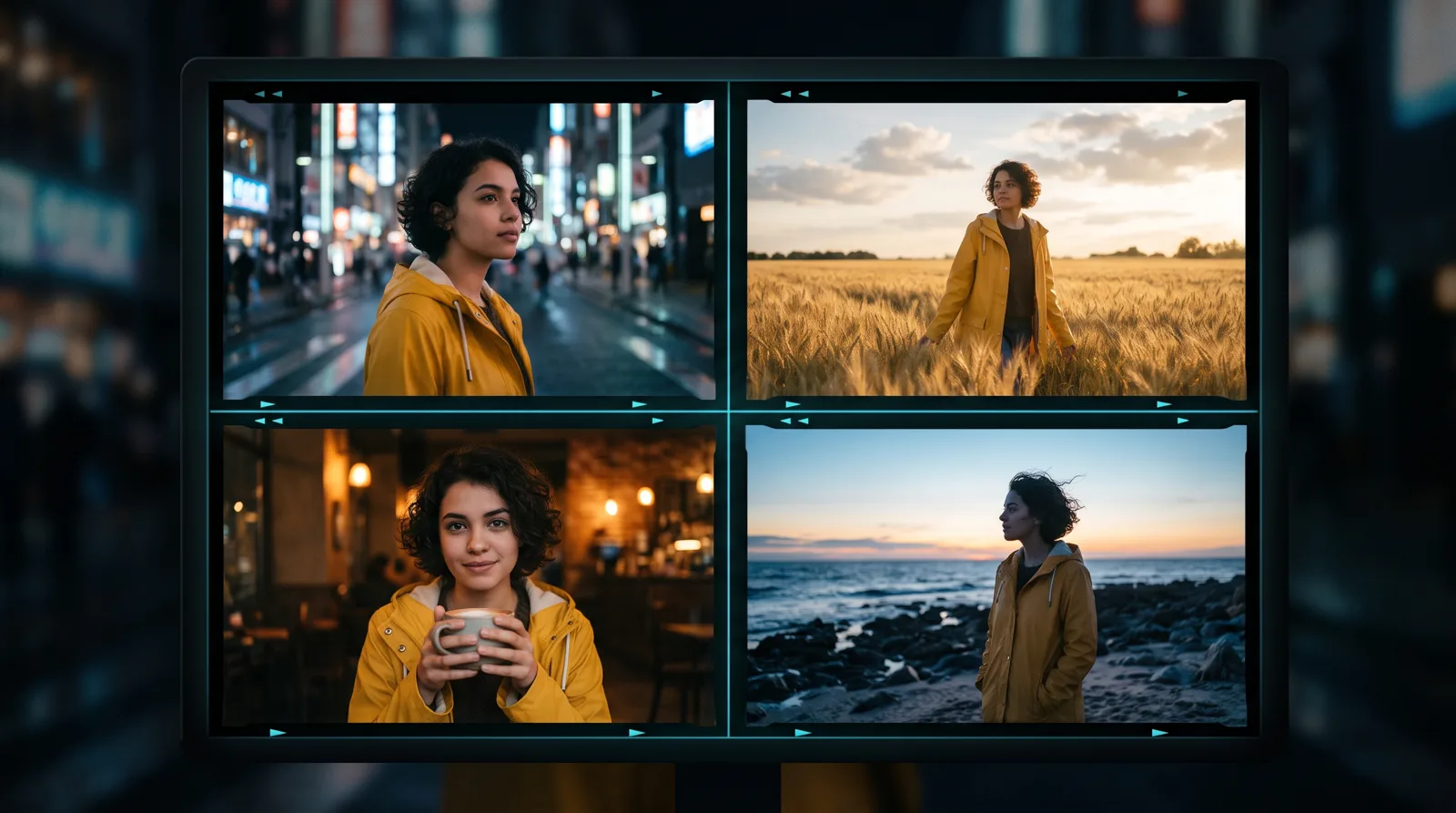
How to Keep the Same Character Across AI Images and Videos
Faces that change from shot to shot are the biggest giveaway of AI content. Here is a practical workflow for consistent AI characters — from reference photos to finished video.
READ_TRANSMISSION
How to Write AI Video Prompts That Look Cinematic: Camera, Lens and Light
Generic prompts make generic videos. Learn the film language — shot size, camera movement, lens, lighting and colour — that turns AI clips into cinematic shots.
READ_TRANSMISSION
Kling vs Seedance vs Wan vs Hailuo: Which AI Video Model Should You Use?
A practical guide to choosing between today's leading AI video models — what each one is good at, and how to test them side by side without paying for four subscriptions.
READ_TRANSMISSION