
4_MIN_READAI Video Ads
AI Video Ads for Social Media: A Practical Guide for Brands

Plan stronger AI video ads for Instagram, TikTok, YouTube, and Facebook with better hooks, formats, testing, and calls to action.
A social video ad has very little time to earn attention. People do not open Instagram, TikTok, Facebook, or YouTube hoping to watch a commercial. The ad has to feel clear before the viewer decides to move on.
AI can help a brand produce more ideas and more versions. That does not mean every version will work. Strong results still come from a clear offer, a useful hook, and steady testing.
Begin with the first two seconds
The opening should make sense with the sound off. Start with a problem, a surprising image, a direct benefit, or a moment that creates a question.
A logo animation is rarely the strongest opening. The logo can appear after the viewer has a reason to stay.
Here are a few simple hook structures:
- Show the frustrating problem first
- Reveal an unexpected use of the product
- Ask a question the customer already has
- Begin near the end of a story, then explain how it happened
- Put the clearest result on screen immediately
The hook should connect to the rest of the ad. A strange image may stop the scroll, but it will not help if the product arrives without a clear link.
Make one ad about one idea
Trying to explain every feature in 15 seconds usually creates a rushed video. Choose one customer problem or one benefit for each ad.
If a product has four strong benefits, make four ads. This gives the campaign more material to test and helps you learn which message matters most to the audience.
AI production is well suited to this approach because a shared visual world can support several focused versions.
Design for the real screen
Most social ads are watched on a phone. Text must be large enough to read, the product must stay visible, and important details should not sit under buttons or captions added by the platform.
Vertical 9:16 is the main format for Reels, TikTok, and Shorts. Square or 4:5 can still work well in feeds. Landscape is useful for YouTube and some website placements.
Do not create one landscape master and crop it at the end. Plan the vertical frame while building each shot. Faces, products, and text may need different positions in each version.
Use captions with care
Many viewers begin with sound off, so captions can help. Keep them short and give each line enough time to be read.
Captions should support the image instead of describing everything that is already visible. If the person is opening a box, the text does not need to say "opening the box." Use that space for the reason the moment matters.
Show the product early
Storytelling can make an ad memorable, but the product should not feel hidden. Viewers need to understand what is being offered before the final second.
The product can appear naturally inside the story. It can solve the problem, change the scene, or become the reason for the visual idea. This often feels better than pausing the film for a separate product shot.
Our Livo Interior promotional film used a story to make an everyday product interesting. The film reached more than one million people without paid promotion. The lesson was simple: people stayed for the story, but the story still led back to the product.
Test changes that teach you something
Making ten random versions creates work without clear learning. Test one meaningful change at a time.
You could test:
- Two opening hooks with the same main edit
- A direct product opening against a story opening
- A customer problem against a product benefit
- A 10-second cut against a 20-second cut
- Two calls to action
Keep the audience and campaign settings steady when possible. Then the result tells you more about the creative choice.
Match the call to action to the campaign
The ending should tell viewers what to do next. "Learn more" is useful when the purchase needs research. "Shop now" fits a clear product offer. An event ad may ask viewers to register or get tickets.
Make sure the landing page continues the same message. If the ad promises one benefit but the page opens with a different story, people may leave.
Build a campaign kit
A useful social production may include one main concept, several hooks, short cut-downs, vertical and feed formats, clean versions, and still frames for thumbnails.
This gives the marketing team enough material to refresh the campaign without starting a new production every week.
You can see more AI marketing videos and ads. If you already know the product and platform, send us the campaign goal and we can help shape the first set of tests.
Join the conversation
Ask a question, share an idea, or leave a little appreciation.
Loading discussion…
// MORE_TRANSMISSIONS
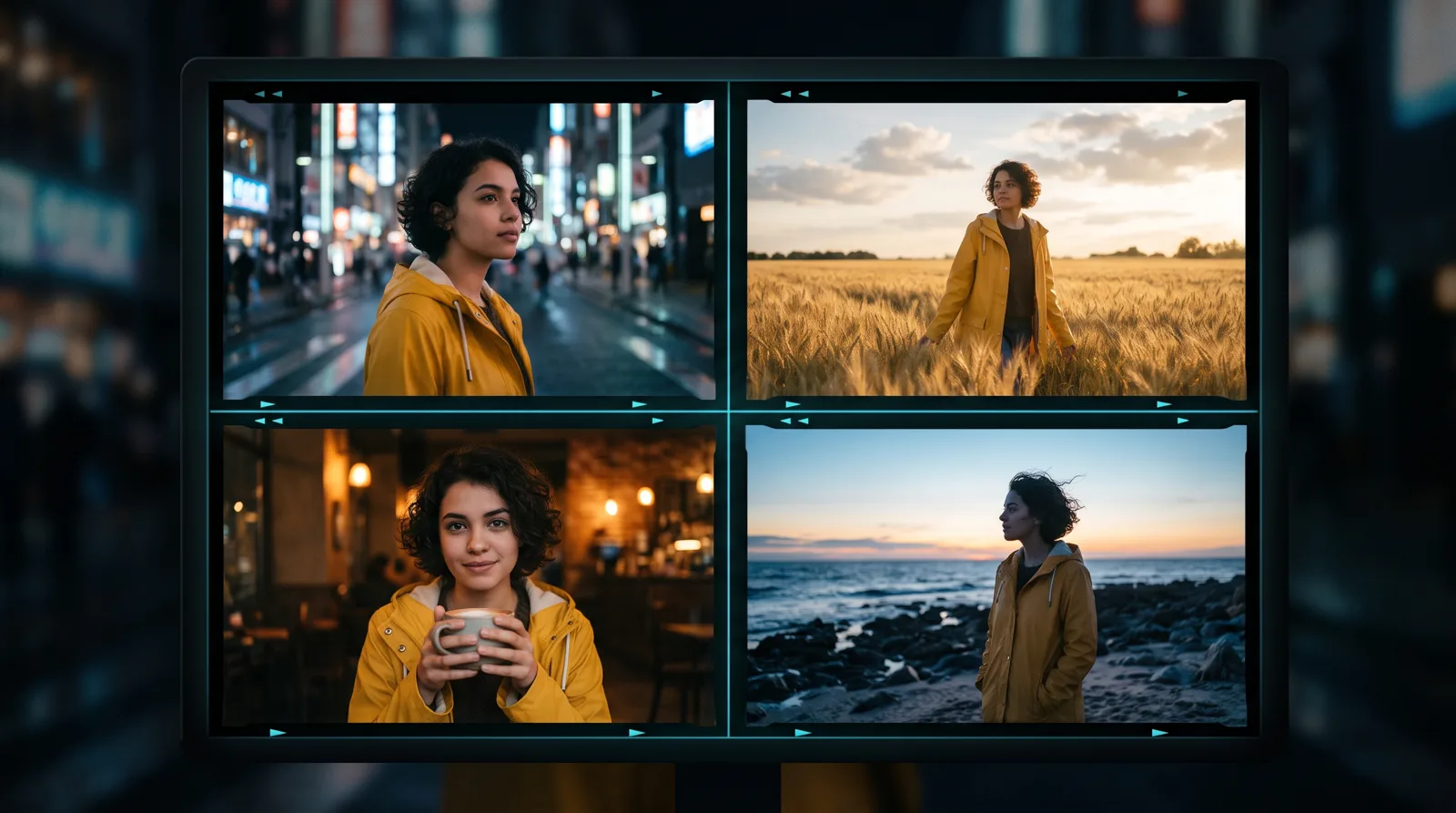
How to Keep the Same Character Across AI Images and Videos
Faces that change from shot to shot are the biggest giveaway of AI content. Here is a practical workflow for consistent AI characters — from reference photos to finished video.
READ_TRANSMISSION
How to Write AI Video Prompts That Look Cinematic: Camera, Lens and Light
Generic prompts make generic videos. Learn the film language — shot size, camera movement, lens, lighting and colour — that turns AI clips into cinematic shots.
READ_TRANSMISSION
Kling vs Seedance vs Wan vs Hailuo: Which AI Video Model Should You Use?
A practical guide to choosing between today's leading AI video models — what each one is good at, and how to test them side by side without paying for four subscriptions.
READ_TRANSMISSION