
2_MIN_READAI Animation
How AI Character Consistency Works in Brand Films
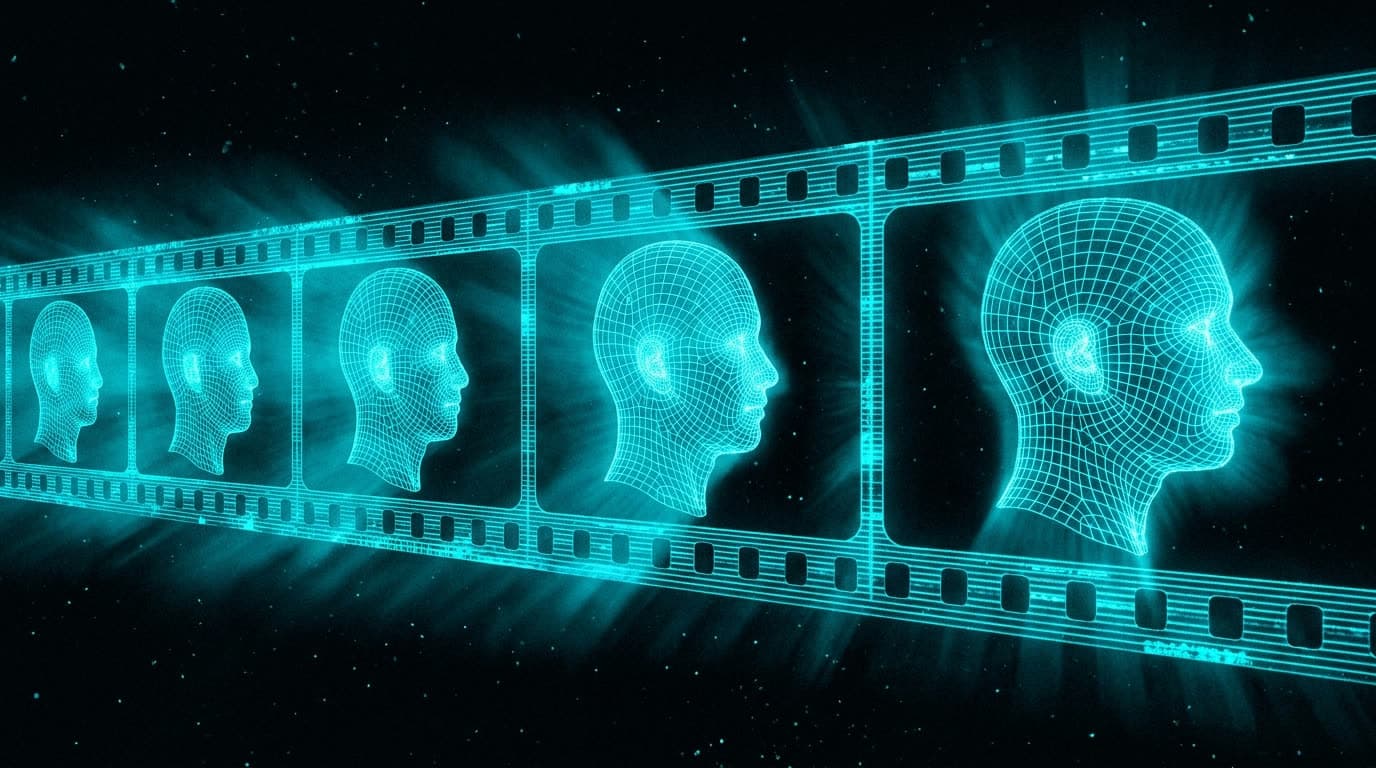
The same face, every frame. How AI-generated characters stay consistent across scenes, lighting, and emotion — and why it's the difference between a tech demo and a story.
Audiences forgive a lot, but they never forgive a protagonist whose face changes between scenes. Character consistency is the single hardest problem in AI filmmaking — and the single biggest tell separating professional AI production from prompt-and-pray content.
Why characters drift
Generative video models create each shot fresh. Ask twice for "a man in his thirties with curly hair" and you'll get two different men. Multiply that across a 40-shot film with changing lighting, angles, and emotions, and your story collapses: viewers stop following a person and start auditing an algorithm.
The locked-identity pipeline
Professional consistency comes from treating a character like a cast actor, not a prompt. Our pipeline locks identity before a single scene is generated:
1. Design once
The character is developed as a standalone asset: face geometry, skin detail, hair behavior, wardrobe, posture, the way they carry weight. This is casting and costume in one step.
2. Build the reference set
From the approved design we generate a controlled reference library — angles, expressions, lighting conditions. Not pretty pictures: coverage, the way a film set shoots coverage.
3. Generate against the lock
Every scene is produced conditioned on that locked identity. Wide shot at dusk, close-up in rain, profile in neon light — same face, same person. When a generation drifts, it fails QC and is regenerated. The character never "averages out".
4. Edit like cinema
Consistency isn't only visual. Continuity of behavior — pacing, gesture, how the character reacts — is an editorial discipline. The cut treats the character as a performance, which is why the audience does too.
The proof
We built Nimal's Story as a public benchmark: a cinematic short with social commentary where one AI-generated protagonist carries every scene. Audiences track Nimal as a person — his tiredness, his pride — and that's the whole point. Nobody emotionally invests in a face that won't stay still.
What this unlocks for brands
- Brand characters without celebrity risk. A consistent character can front campaigns for years, never ages, never has a scandal, and costs nothing to re-book.
- Series content. Episode 2 stars the same character as Episode 1 — the foundation of any content franchise.
- Localization. The same protagonist can speak to every market in every language.
- World continuity. Characters anchor universes; our WonderVerse worlds hold together because their inhabitants do.
Questions to ask any AI studio
- Can I see the same character across ten different scenes and lighting setups?
- Is the character delivered as a reusable asset for future campaigns?
- What happens when a shot drifts — is there a QC standard?
If the answers are vague, you're buying renders, not a character.
Want a character your audience can follow — this campaign and the next five? Start with a brief, and watch Nimal's Story first.
Join the conversation
Ask a question, share an idea, or leave a little appreciation.
Loading discussion…
// MORE_TRANSMISSIONS
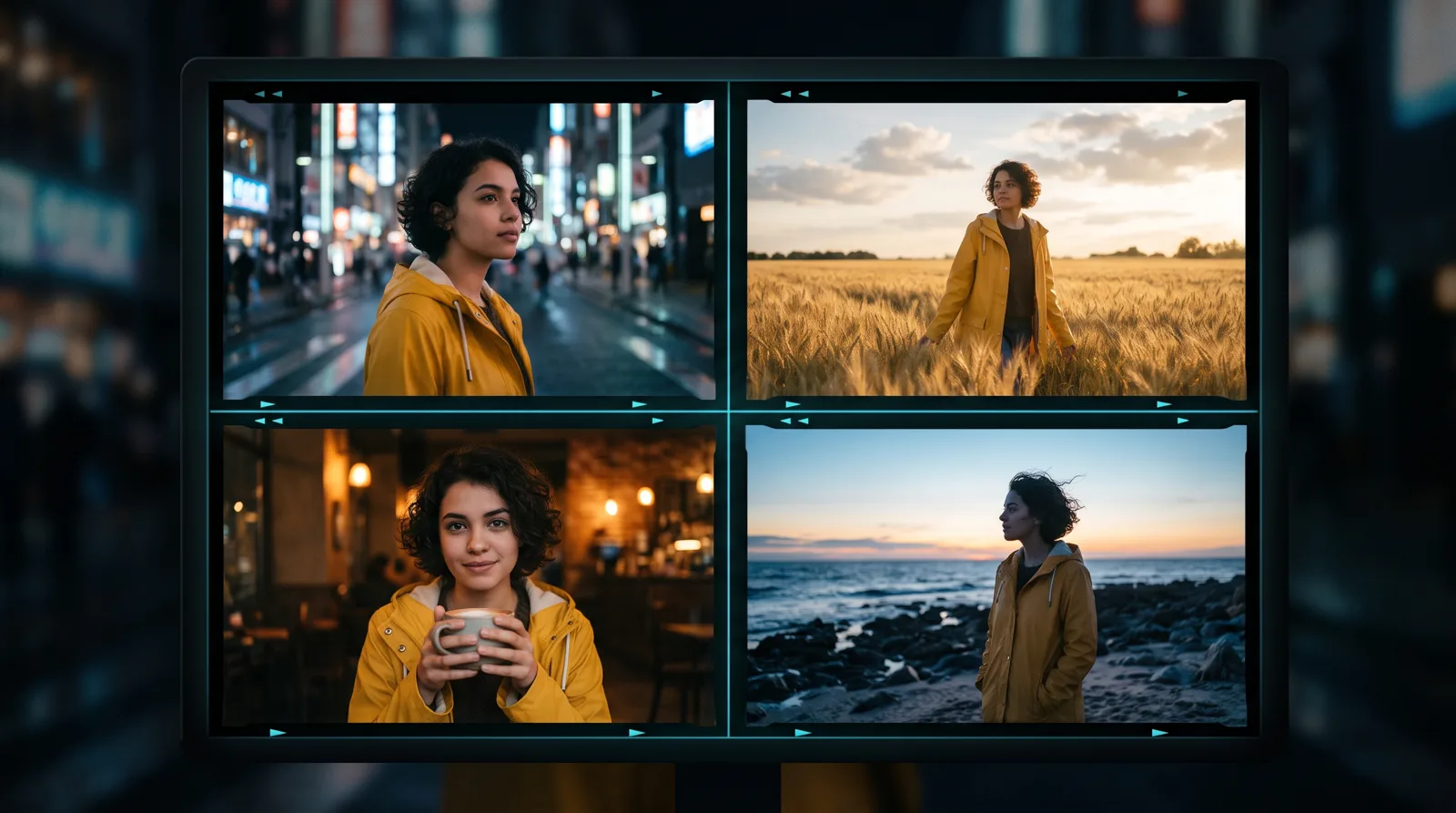
How to Keep the Same Character Across AI Images and Videos
Faces that change from shot to shot are the biggest giveaway of AI content. Here is a practical workflow for consistent AI characters — from reference photos to finished video.
READ_TRANSMISSION
How to Write AI Video Prompts That Look Cinematic: Camera, Lens and Light
Generic prompts make generic videos. Learn the film language — shot size, camera movement, lens, lighting and colour — that turns AI clips into cinematic shots.
READ_TRANSMISSION
Kling vs Seedance vs Wan vs Hailuo: Which AI Video Model Should You Use?
A practical guide to choosing between today's leading AI video models — what each one is good at, and how to test them side by side without paying for four subscriptions.
READ_TRANSMISSION